







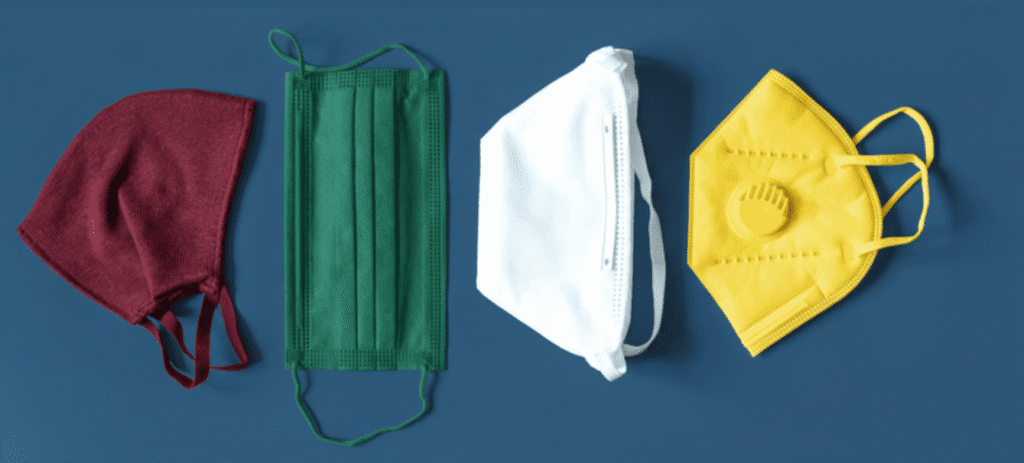
The World Health Network (WHN) has reiterated that medical masks, commonly called surgical or procedure masks should not be considered Personal Protective Equipment (PPE). Recent clarifications from the British Occupational Hygiene Society (BOHS) and the Canadian Standards Association (CSA) underline that only respirators such as N95s and FFP2s meet the criteria for true respiratory protection. During the COVID-19 pandemic, confusion over mask types and limited respirator supplies led many health workers to rely on medical masks.

BOHS has now stated that it is a “breach of Health and Safety law for employers to suggest that medical masks protect against inhaled hazards.” Manufacturers themselves have never designed or certified these masks as PPE.
The updated CSA Z94.4 standard explicitly recommends continuous use of respirators in healthcare settings, noting that surgical masks “shall not be used as respiratory protection by health care workers.” Similarly, global regulatory bodies including the FDA, CDC, EU standards, and the Canadian Centre for Occupational Health and Safety agree that medical masks only serve as source control – not protection for the wearer.
“The only true and legal PPE to protect against airborne pathogens is a respirator mask,” WHN emphasizes, aligning with occupational hygienists and airborne transmission experts worldwide.
Medical masks were originally designed as splash guards in surgical suites to block fluids, not airborne pathogens. In contrast, respirators form a tight seal and filter microscopic particles, offering proven protection against aerosolized viruses and bacteria. The WHN, BOHS, and CSA call for urgent policy correction across healthcare systems. Employers and regulators must ensure that respirators – not surgical masks are used as standard PPE for all health workers exposed to airborne hazards. Anything less compromises both worker safety and public health.