





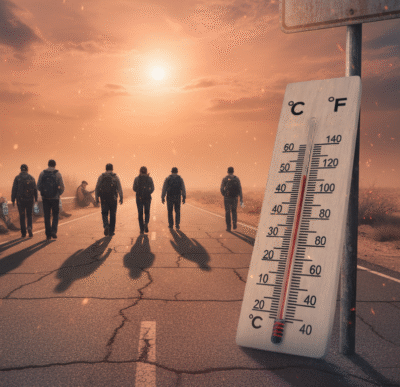
At the 30th UN Climate Change Conference (COP30) in Belém, Brazil, WHO and the Government of Brazil jointly released a special report titled – “COP30 Special Report on Health and Climate Change: Delivering the Belém Health Action Plan”. The report outlines that more than 500,00 people die each year from extreme heat, and around one in twelve hospitals worldwide face risk of climate-related shutdowns. It also finds that 3.3 to 3.6 billion people live in areas highly vulnerable to climate change. Key vulnerabilities include health systems that are not climate-resilient, infrastructure exposed to extreme weather, and uneven adaptation plans that overlook gender, disability and income disparities.

“Allowing global warming to exceed 1.5°C would be a moral failure and deadly negligence. Even a temporary overshoot will have dramatic consequences — every fraction of a degree means more hunger, displacement, and loss.”
The report calls for immediate, coordinated action:
Integrate health objectives into national climate commitments like Nationally Determined Contributions (NDCs) and National Adaptation Plans (NAPs).
Invest in resilient infrastructure, especially health facilities, and strengthen workforce capacity.
Empower communities and local knowledge systems to participate in climate-health responses.
Rapidly transition the health sector itself to low-carbon, climate-resilient operations.
Key Highlights
Over 540,000 heat-related deaths annually linked to climate change.
One in 12 hospitals globally at risk due to climate-driven events.
3.3-3.6 billion people living in highly vulnerable regions.
Fewer than 30% of national health adaptation studies consider income; fewer than 1 % include people with disabilities.
Health sector contributes about 5% of global greenhouse-gas emissions.
Countries cannot treat climate change and health as separate issues anymore. Strengthening health systems and embedding health priorities into climate policy is essential. THE TIME FOR ACTION IS NOW.