







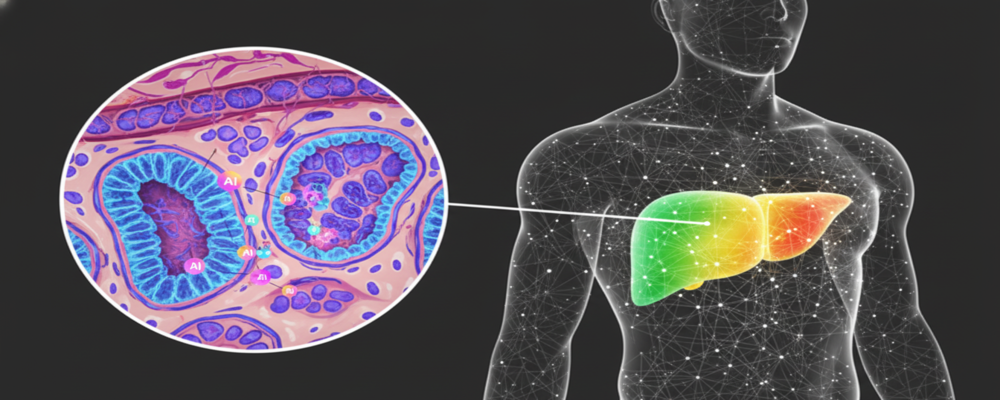
Researchers developed and tested LiverPRO, a software tool designed to detect clinically significant liver fibrosis early in people seen in primary care settings. The study was a prospective cohort study that included six independent cohorts from Denmark, Germany, and England involving patients with steatotic liver disease caused by alcohol use or metabolic dysfunction. LiverPRO was built using data from nine routine blood tests including AST, ALP, GGT, INR, albumin, sodium, bilirubin, platelets, and cholesterol along with age. The tool was trained to identify two key outcomes:

Clinically significant fibrosis (≥F2)
Advanced fibrosis (≥F3)
It was developed using fractional polynomial regression and validated against liver stiffness measured by transient elastography (≥8 kPa and ≥12 kPa). Researchers also assessed its ability to predict liver-related events over 2 and 5 years.
Key Findings
In the development cohort (n=462), LiverPRO accurately diagnosed significant fibrosis.
In the DECIDE validation cohort (n=6,468), LiverPRO achieved an AUC of 0.80, similar to advanced tests like Enhanced Liver Fibrosis (ELF) (AUC 0.78) and LiverRisk score (AUC 0.81).
LiverPRO performed better than the Fibrosis-4 (FIB-4) index (AUC 0.69) and the NAFLD Fibrosis Score (AUC 0.74).
The tool can adapt based on which blood test results are available.
LiverPRO is a reliable, accurate, and adaptable tool that can help detect significant liver fibrosis, estimate liver stiffness, and predict future liver-related complications in primary care settings.