







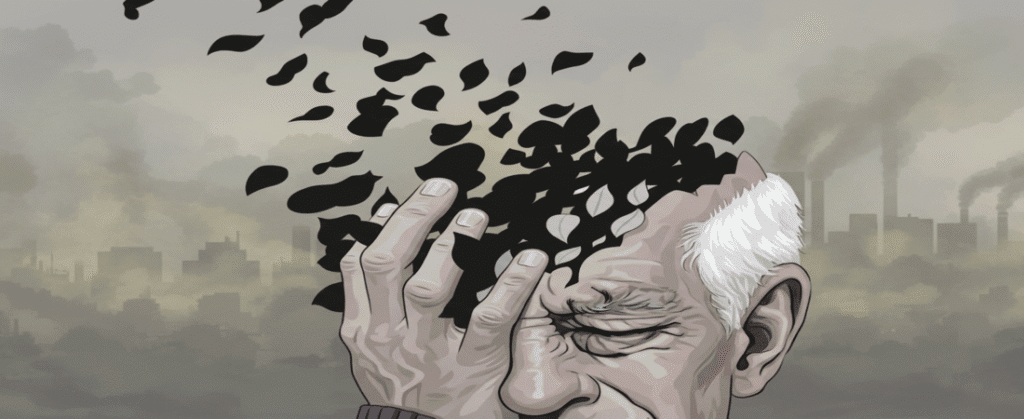
New findings from the State of Global Air 2025 (SoGA) report , published by the Health Effects Institute and the Institute for Health Metrics and Evaluation (IHME) — reveal that air pollution contributed to approximately 626,000 dementia-related deaths in 2023, representing nearly 29 % of all global dementia fatalities.

The SoGA report offers an in-depth assessment of global air quality and its associated health impacts, presenting detailed data and trends for countries worldwide.
“The scientific evidence linking air pollution to increased dementia risk is now strong enough to justify policy action.” — Dr Burcin Ikiz, Stanford University
Why this matters?
Until now, much of the focus on air pollution has centred on respiratory and cardiovascular harms. The SoGA report expands the scale of concern to brain health, estimating that the burden of air-pollution-related dementia also amounted to 11.6 million healthy life years lost globally in 2023. Exposure to fine particulate matter (PM₂.₅) and other air contaminants is believed to trigger inflammation and oxidative stress in the brain, accelerating neurodegenerative decline.
LMICs bear the greatest burden, with South Asia and Africa highlighted as hotspots. In India alone, more than 54,000 dementia deaths in 2023 were attributed to air pollution.
What this report calls for?
The authors urge global leaders to treat clean-air measures as integral to brain-health strategies, not merely environmental interventions. The evidence suggests that reducing air pollution could simultaneously cut dementia rates, improve cardiovascular health, and boost life expectancy. This watershed moment means air pollution must no longer be viewed solely as an environmental hazard: it is a major driver of degenerative brain disease. Tackling it effectively demands coordinated action across sectors – health, environment, urban planning and policymaking.