






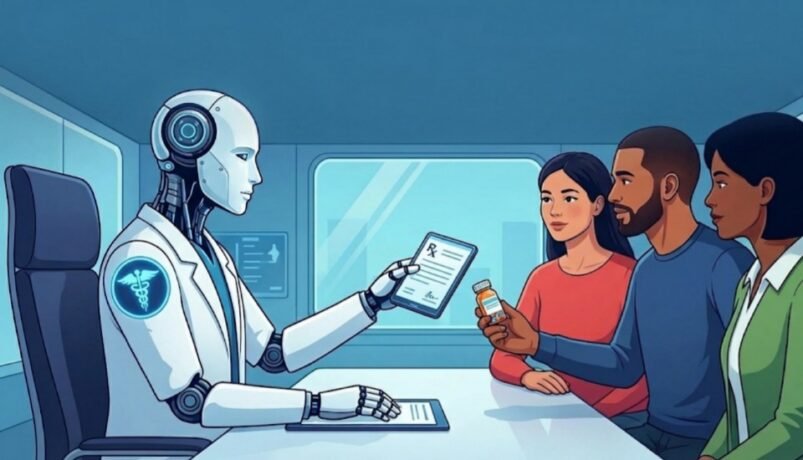
Utah has become the first US state to allow artificial intelligence to refill certain prescription drugs, marking a major shift in how healthcare decisions are made. In this pilot program, prescription refills can be approved by AI rather than a doctor, though initial prescriptions must still come from a human physician.

How the Program Works?
The initiative is being implemented through Doctronic, a New York based health technology startup. Oversight is provided by the Utah Department of Commerce via the state’s Office of Artificial Intelligence Policy. Patients access the service online, confirm they are in Utah, upload photo identification, and answer chatbot questions about symptoms, medications, pharmacies, and recent health changes. If the AI flags any uncertainty, the case is referred to a licensed physician.
What Drugs Are Covered?
The pilot allows AI based refills for 190 commonly prescribed medications. High risk drugs including painkillers, injectables, and ADHD medications are excluded. The system is limited strictly to refills, not first time prescriptions. As an added safeguard, the first 250 prescriptions in each drug category are reviewed by physicians before full automation is permitted.
State officials say the program could save time and money for patients, especially in rural areas where access to physicians is limited. Supporters argue that automating low risk refill decisions allows doctors to focus on complex clinical care.
According to the Utah Department of Commerce, Doctronic’s internal data shows that the AI’s refill recommendations match human doctors in over 99 percent of cases. Officials say this level of agreement supports cautious experimentation under regulatory supervision.
Concerns From Doctors
Medical groups remain cautious. The American Medical Association has warned that AI systems may miss subtle clinical warning signs that physicians would notice, and that automated systems could be misused by patients seeking inappropriate prescription. The program operates under Utah’s regulatory sandbox, which allows temporary waivers of existing rules while closely monitoring safety, performance, and consumer harm. State lawmakers authorized this model to test emerging technologies that challenge traditional regulations.
Utah officials say findings from the pilot will be shared publicly and could influence how other states and federal agencies approach AI driven healthcare decisions. Regulators describe the initiative as a potential national model for governing high risk AI in medicine.