





 I. Overview:
 I. Overview:
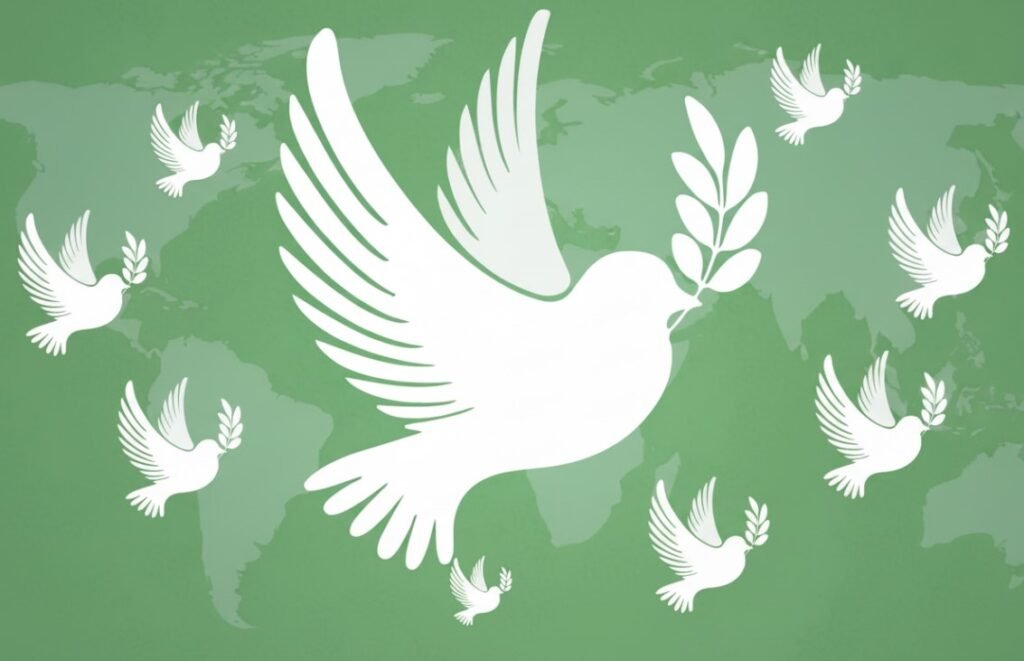
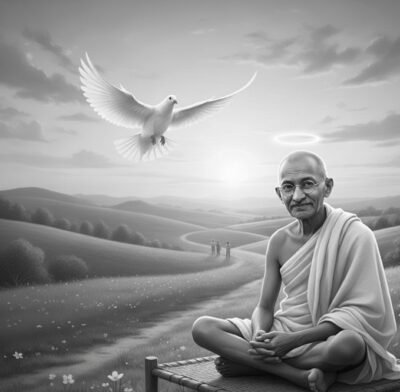
The International Day of Non-Violence or World Peace Day is observed every year on October 2, coinciding with the birthday of Mahatma Gandhi, a global icon of peace and non-violence. The United Nations established this day to disseminate the message of non-violence through education and public awareness, and to reaffirm the universal relevance of non-violent principles in resolving conflict and promoting justice.
II. Significance of the Theme:
This year’s theme calls for urgent action to transform peace from an ideal into reality. It reminds us that every step – global, local, or personal highly matters in building justice, unity, and non-violence for a sustainable future.
III. What is Non-Violence?
Non-violence is both a philosophy and a strategy for social change. It rejects the use of physical violence to achieve political or social goals and instead relies on methods such as:
- Civil disobedience
- Peaceful protest
- Negotiation and dialogue
- Grassroots advocacy
Gandhi’s non-violent resistance inspired movements for civil rights and freedom across the world, including the U.S. civil rights movement led by Martin Luther King Jr.
IV. Quick Facts about IDNV: 💡
- Mahatma Gandhi led India’s independence movement using non-violent civil disobedience.
- Gandhi Jayanti is a national holiday in India and a UN-designated observance worldwide.
- Every year, the Peace Bell, a gift from Japan, is rung at the United Nations Headquarters to symbolize global unity and the commitment to non-violence.
- The term “Ahimsa” (non-violence) is rooted in Indian spiritual traditions.
- Research suggests, non-violent campaigns have a twice greater success rate than violent ones.
- The UN General Assembly adopted the resolution for this day on June 15, 2007.
- Non-violence is recognized as essential to promoting peace, democracy, and sustainable development.
V. A Brief History of IDOP:
2004: Proposal introduced by the Indian Congress Party to the UN.
2007: UN General Assembly formalizes the observance via resolution A/RES/61/271.
2008-23: Observed globally through educational campaigns, peace rallies, film screenings, and discussions on conflict resolution.
2024: The focus was on building non-violent movements in the digital age.
2025: “Act Now for a Peaceful World,” calls the need for immediate, active participation from everyone to solve conflicts, build unity, and promote a safer future through dialogue and cooperation.
VI. How to Observe International Day of Older Persons:
- Organize peace marches or public forums promoting non-violent solutions.
- Share quotes, teachings, and stories of Gandhi and other peace leaders online.
- Launch social media campaigns using hashtags like #NonViolenceDay #GandhiJayanti #PeaceMatters
- Support interfaith and intercultural dialogues to foster unity and tolerance.
🔗 References:
- https://www.un.org/en/observances/non-violence-day
- https://www.pib.gov.in/PressReleseDetailm.aspx?PRID=2173476#