






I. Overview
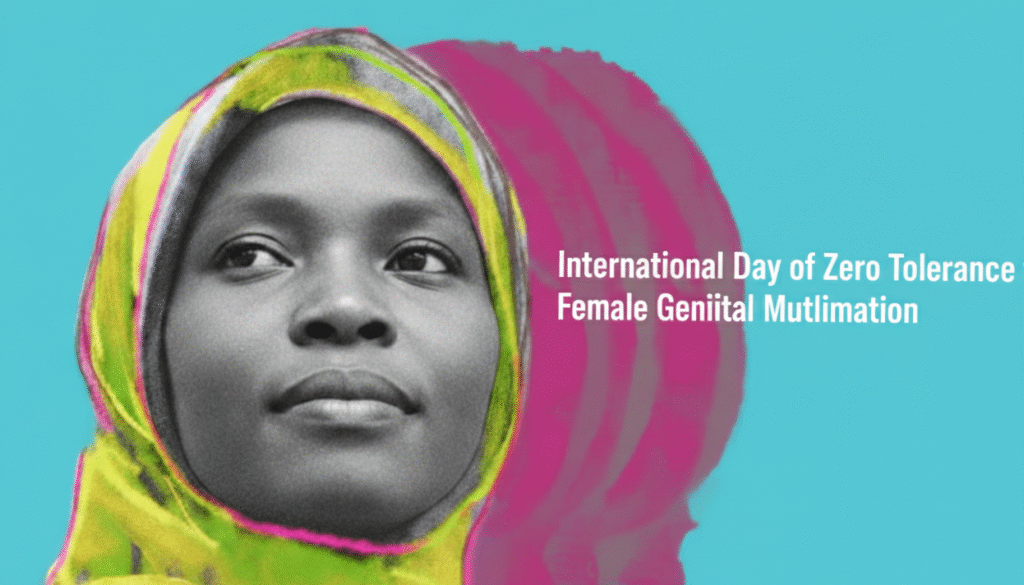
The International Day of Zero Tolerance for Female Genital Mutilation (FGM) is observed every year on 6 February to mobilize global action to end FMG, a harmful practice that violates the human rights, health, and dignity of girls and women.
The day is recognized by the UN, the day brings governments, civil society, health professionals, educators, and communities together to confront FGM through prevention, protection, survivor support, and accountability. The observance emphasizes that FGM is not a cultural inevitability but a preventable form of gender based violence rooted in inequality and social norms.
II. Significance of the Theme
“Towards 2030” calls for accelerated action to end female genital mutilation by strengthening laws, shifting social norms, protecting girls at risk, supporting survivors, and scaling community-led solutions to achieve SDG 5 within this decade.
III. Why to Celebrate This Day?
FGM causes lifelong physical, psychological, and sexual health consequences, with no medical benefit. Observing this day keeps global attention on girls at risk, centers survivor voices, and pressures institutions to deliver on promises. It also helps challenge myths that sustain the practice, supports families who choose abandonment, and reinforces that protecting girls is a shared responsibility across sectors and generations.
IV. Quick Facts about Female Genital Mutilation
Over 200 million girls and women alive today have undergone FGM worldwide.
FGM is practiced in at least 30 countries across Africa, the Middle East, and parts of Asia, with cases reported globally due to migration.
Each year, an estimated 4 million girls are at risk of undergoing FGM.
FGM is most commonly performed on girls between infancy and 15 years of age.
There are four major types of FGM, ranging from partial removal of genital tissue to infibulation.
FGM has NO health benefits and can cause severe bleeding, infections, infertility, childbirth complications, and death.
Survivors face increased risks of postpartum hemorrhage and newborn deaths.
FGM is internationally recognized as a human rights violation.
V. A Brief History of the International Day of Zero Tolerance for FGM
1950-70s: Early African women’s rights activists begin publicly challenging FGM.
1990: FGM gains recognition as a global human rights issue, not a private cultural matter.
1997: Joint statements by WHO, UNICEF, and UNFPA formally condemn FGM.
2003: African women’s networks observe February 6 as a day against FGM.
2012: The UNGA adopts a resolution calling for global elimination of FGM.
2013: February 6 is formally recognized as the International Day of Zero Tolerance for FGM.
2015: Ending FGM is included under SDG 5 on gender equality.
2020s: Global programs expand survivor centered care, community dialogue, and youth engagement.
VI. How to Observe the Day?
Learn and share: Use accurate, respectful information to challenge myths and stigma around FGM.
Center survivors: Amplify survivor voices and support access to health, legal, and psychosocial services.
Support prevention: Engage with or donate to organizations working on community led abandonment.
Advocate for policy: Call for strong laws, enforcement, and funding for prevention and care.
Engage youth and men: Promote dialogue that shifts social norms and protects the next generation.
Support women-focused work: Donate, volunteer, or collaborate with groups advancing women’s education, health, safety, economic independence, and leadership.
References
United Nations | International Day of Zero Tolerance for Female Genital Mutilation