





I. Overview
United Nations Day or UN Day is observed every year on October 24 to commemorate the entry into force of the United Nations Charter in 1945, marking the official founding of the UN. The day is used to promote awareness of the UN’s purposes, achievements, and ongoing role in global cooperation.
II. Significance of the Theme 2025:
This year’s theme highlights the need to renew international solidarity, adapt multilateral institutions to new global challenges, and advance the Agenda 2030, climate action, peace, and justice.
III. What Is United Nations Day?
UN Day is a global observance adopted by the UN General Assembly to “make known to the people of the world the aims and achievements of the UN and to gain their support.” It is a day of meetings, cultural events, exhibits, and media efforts to highlight the UN’s role in peace, human rights, development, and international cooperation.
The United Nations was created primarily to maintain international peace and security, promote cooperation among nations, and prevent the recurrence of world wars like World War II. Before the UN, there existed the League of Nations (LoN), established in 1919 after World War I under the Treaty of Versailles. However, the League failed for various reasons that ultimately, led to its dissolution in 1946.
IV. Quick Facts about UN Day:
- The UN began in 1945 with 51 countries and has grown to include 193 member states today.
- The UN General Assembly is the only platform where every country whether a large or small one has an equal vote.
- The latest country to join was South Sudan in 2011.
- UN currently deploys over 70,000 peacekeepers in multiple regions worldwide.
- The UN and its specialized agencies have collectively won the Nobel Peace Prize 12 times, recognizing their efforts in peacekeeping, human rights, refugees, and humanitarian aid.
- UN launched the 17 SDGs, a global agenda to end poverty, protect the planet, and ensure prosperity for all by 2030.
- The UN Security Council’s “Veto Power” is Both a Strength and a Weakness.
- The Universal Declaration of Human Rights (UDHR), adopted in 1948, became the foundation for modern human rights laws and conventions worldwide.
- The World Food Programme (WFP), awarded the 2020 Nobel Peace Prize, provides emergency food aid to over 150 million people annually in crisis zones and famine-affected areas.
- The UN Framework Convention on Climate Change (UNFCCC) initiated international climate negotiations, resulting in the Kyoto Protocol (1997) and the Paris Agreement (2015).
V. A Brief History of UN Day:
1945: The United Nations Charter becomes effective on October 24.
1947: UN General Assembly proclaims October 24 as United Nations Day to publicize the UN’s goals and achievements.
1971: The Assembly recommends that UN Day be a public holiday in UN member states.
2025: As the UN turns 80, observances will emphasize renewal, global cooperation, and bridging the gap between promise and action.
VI. How to Observe UN Day?
Organize or attend dialogues, exhibitions, or concerts about global issues and the UN’s role
Promote multilingual and intercultural events reflecting UN’s universal membership
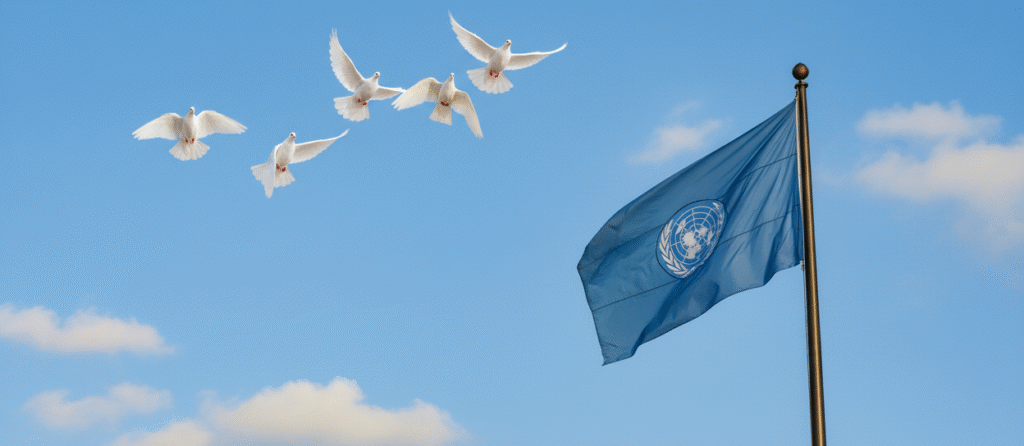
Light buildings or monuments in UN blue, and display the UN flag
Engage youth and schools in global citizenship education, Model UN events
Advocate locally for commitments to SDGs, human rights, climate action
Share content on social media using UN Day themes, infographics on UN achievements
References:
- https://www.un.org/en/
- https://www.un.org/en/UN80