





I. Overview
Anger Awareness Week (AAW) is observed annually from December 1 to 7 to highlight the importance of understanding and managing anger. The week was launched by the British Association of Anger Management in the UK around the start of December, an especially high-stress time of year. It is celebrated to promote understanding, education, and management of anger as a normal human emotion that, when left unchecked, can harm mental health, relationships, and society.
II. Significance of the Week
This week marks a dedicated time to reflect on one of the most powerful yet misunderstood human emotions. The week serves as a reminder that anger, though often perceived as “NEGATIVE,” is a natural response that can either destroy or heal, depending on “HOW IT IS MANAGED.”
III. What Is Anger?
Anger is a natural emotional response to perceived threats, injustices, frustrations, or violations. It is a basic human emotion—like happiness, sadness, or fear—that signals when something feels wrong or unfair.
- Biologically, anger activates the body’s “fight-or-flight” response, preparing an individual to confront danger or defend themselves.
- From a physiological standpoint, anger triggers the release of adrenaline and cortisol, increasing heart rate, blood pressure, and energy levels. These changes help the body react quickly to perceived challenges but can be harmful if sustained or uncontrolled.
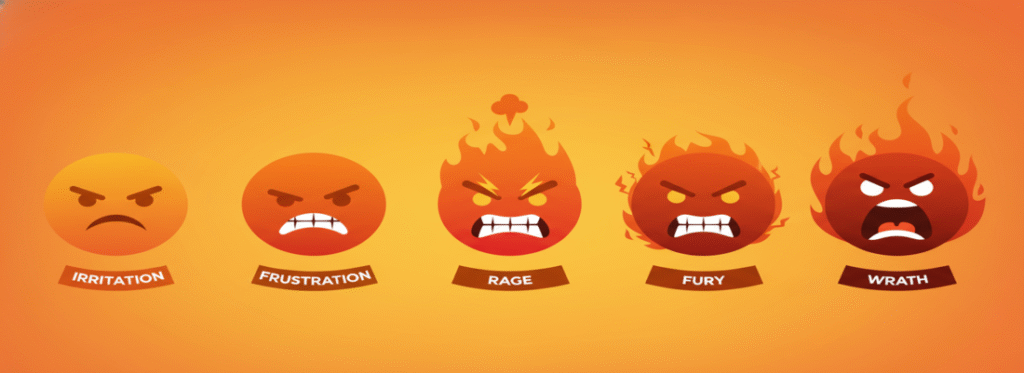
- Psychologically, anger can arise when a person feels hurt, powerless, frustrated, or disrespected. It may manifest as irritation, resentment, or rage, depending on intensity and duration.
Types of Anger
Passive Anger: Suppressed emotions that may lead to withdrawal or resentment.
Aggressive Anger: Outward, often uncontrolled expression through verbal or physical aggression.
Assertive Anger: Controlled and constructive expression of anger, used to communicate needs effectively.
IV. Quick Facts about Anger
- The week is held from December 1 to 7 each year.
- 1 in 10 people report struggling with uncontrolled anger or frequent irritability
- About 32% of adults say they have a close friend or family member who struggles with anger issues.
- 58% of people report feeling angry at least once a day, often linked to stress, work pressure, or interpersonal conflicts.
- Chronic anger has been associated with 2–3 times higher risk of developing anxiety and depressive disorders.
- Digital anger is a growing issue: online hostility, cyberbullying, and aggressive comments have increased by over 30% in the last five years.
V. A Brief History of AAW
2000: The week was launched in the UK by the British Association of Anger Management (BAAM).
2018: The week emphasised the social impact of anger (domestic violence, road-rage, workplace stress).
2020: AAW’s 20th year; theme included passive-aggressive anger; expanded online offerings due to pandemic-impacts.
VI. How to Observe AAW?
- Reflect: Take time this week to identify your personal anger triggers, patterns, and responses.
- Educate: Share information on healthy anger expression—both in personal, home, and workplace settings.
- Engage: Use online toolkits (e.g., BAAM’s “Keep Your Cool” kit) and organise discussion sessions in schools, workplaces or community groups.
- Support: Encourage access to anger-management resources, counselling, peer support groups, or family interventions if anger is impacting life.
- Promote: Use social media or workplace/internal communications to raise awareness about anger’s impact and constructive alternatives—especially ahead of the holiday period.
References:
- https://www.awarenessdays.com/awareness-days-calendar/anger-awareness-week/
- https://www.angermanage.co.uk/anger-awareness-week/
- https://www.healthassured.org/blog/national-anger-awareness-week/
- https://researchforyou.co.uk/mac-news/anger-awareness-week-exploring-anger-issues/