





I. Overview
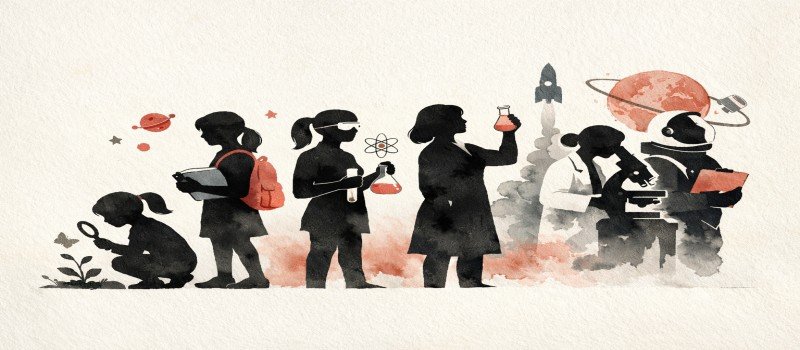
The International Day of Women and Girls in Science is observed annually on February 11 to promote full and equal access, participation, and leadership of women and girls in science, technology, engineering, and mathematics (STEM) fields worldwide. This United Nations-designated day highlights the vital role women and girls play in scientific discovery and innovation and the need to dismantle long-standing barriers to gender equality in science.
II. Significance of the Theme
The 2026 theme – “Synergizing AI, Social Science, STEM and Finance: Building Inclusive Futures for Women and Girls” – emphasizes integrating emerging fields like artificial intelligence and finance with traditional STEM disciplines to create inclusive opportunities. It highlights how equitable participation in the scientific workforce strengthens innovation, economic growth, and sustainable development for all.
III. What is International Day of Women and Girls in Science ?
This international observance was proclaimed by the United Nations General Assembly in 2015 to address the persistent gender gap in science and technology. It encourages governments, educational institutions, scientific bodies, and civil society to create policies and programs that support women’s and girls’ full participation in all areas of science and research, recognizing this as fundamental to achieving the 2030 Agenda for Sustainable Development
IV. Quick Facts about International Day of Women and Girls in Science:
- Adopted by the UN General Assembly (resolution A/RES/70/212) in 2015.
- Observed every February 11 as a global United Nations observance..
- Less than one-third of researchers worldwide are women, highlighting ongoing gender inequality in science.
- Only 35 % of STEM graduates globally are women, showing under-representation at the education level.
- In G20 countries, women hold about 22 % of STEM jobs — roughly half their representation in the wider workforce.
- Women are also under-represented in leadership and advanced scientific roles, only 1 in 10 STEM leaders is a woman.
- Women’s participation in cutting-edge fields such as artificial intelligence is low (e.g., ~22 % of AI professionals are women), illustrating gaps in emerging tech.
- Closing the gender gap in science supports sustainable development, economic growth, and social progress.
V. A Brief History of International Day of Women and Girls in Science:
2013:UN General Assembly recognized the need for gender equality in science and innovation.
2015: United Nations officially proclaimed February 11 as the International Day of Women and Girls in Science through resolution 70/212.
2016: The first global observance took place, marking the start of annual commemorations and international events highlighting women’s role in science and calling for parity in research and innovation.
2016–2024: Annual observances highlighted themes such as gender parity, inclusive innovation, and leadership of women in science.
2025: “Charting Progress to Shape the Future: The Best is Yet to Come” marked the tenth anniversary and reinforced efforts for gender equality in science.
2026: The focus on synergizing AI, social science, and STEM further promotes inclusive scientific futures.
VI. How to Observe International Day of Women and Girls in Science ?
- Highlight achievements: Share stories and profiles of women scientists and girls in STEM on social media.
- Promote education: Organize or attend talks, workshops, or school events that encourage girls to pursue science.
- Advocate policy: Encourage governments and institutions to adopt gender-inclusive science policies and support programs.
- Mentor and support: Facilitate mentorship opportunities for girls and early-career women researchers.
- Use hashtags: Amplify the message with global tags like #WomenInScience, #GirlsInScience, #WomenInSTEM, and #February11.
References:
https://www.un.org/en/observances/women-and-girls-in-science-day/
https://www.internationaldays.org/february/internationaldayofwomenandgirlsinscience
https://www.unesco.org/en/days/women-girls-science
http://unpartnerships.un.org/events/international-day-women-and-girls-science
https://www.trvst.world/equality-diversity/international-day-of-women-and-girls-in-science