





I. Overview
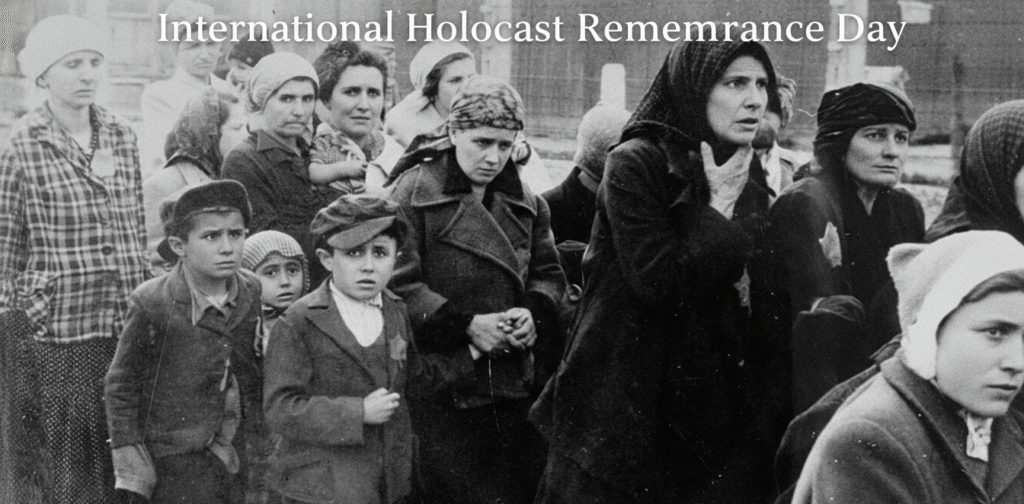
International Holocaust Remembrance Day (IHRD) is observed every year on January 27 to honour the six million Jewish people murdered during the Holocaust, along with millions of people with disabilities, LGBTQ individuals, political prisoners and others targeted by the Nazi regime. The day marks the anniversary of the liberation of Auschwitz-Birkenau, the largest Nazi concentration camp.
The observance serves as a solemn reminder of the consequences of unchecked hatred, racism, antisemitism and totalitarianism. It urges the world to remember not only the scale of loss but also the individual stories, humanity and resilience of those who suffered.
II. Significance of the Theme
The theme “Holocaust Remembrance for Dignity and Human Rights” focuses on using the memory of the Holocaust to defend human dignity and strengthen human rights today. Remembering the Holocaust is not only about the past. It is a warning. When dignity is stripped away from people through hate, discrimination, or dehumanization, mass violence becomes possible. The theme links memory with action. Remembering the Holocaust is a moral obligation, but protecting dignity and human rights in the present is the real test.
III. What is the Holocaust?
The Holocaust was the systematic, state-sponsored persecution and murder of millions of Jews by Nazi Germany and its allies during World War II. It took place roughly between 1933 and 1945, but it did not begin with gas chambers. It began with ideas, laws, and silence.
The Holocaust shows how quickly ordinary societies can descend into mass violence when hatred is normalized, laws are weaponized, and people stay silent. It is not only Jewish history. It is a global warning about what happens when human dignity is denied.
IV. Quick Facts About the Holocaust
- Six million Jews were murdered between 1933 and 1945.
- More than one million people perished at Auschwitz-Birkenau alone.
- Millions of Roma, people with disabilities and political prisoners were also targeted.
- The Nazis established more than 44,000 ghettos, camps and detention sites.
- Tens of thousands of children were killed or separated from their families.
- Survivor testimony remains one of the most important educational tools.
- Holocaust denial and distortion remain active threats worldwide.
- Nations around the world use this day to reinforce commitments to preventing genocide.
V. A Brief History of the Holocaust
1945: Soviet forces liberate Auschwitz-Birkenau on January 27.
194-50s: Trials at Nuremberg establish international accountability for war crimes and genocide.
1970-90s: Growing emphasis on survivor testimony and institutionalising Holocaust education.
2005: The UN officially designates January 27 as Holocaust Remembrance Day.
2010-20: Global rise in antisemitism prompts renewed education and advocacy.
2021-24: Increased focus on combating denial, online hate speech and extremist narratives.
2025: Memory, Justice, Humanity reaffirms the world’s responsibility to protect truth and dignity.
VI. How to Observe the Day?
- Participate in memorial ceremonies or candle-lighting events.
- Read or listen to survivor testimonies to understand lived experiences.
- Visit Holocaust museums, exhibitions or virtual archives.
- Share educational material on antisemitism, genocide and human rights.
- Encourage schools to integrate Holocaust education into their curriculum.
- Speak out against hate speech, discrimination and denialism.
- Support organisations working on genocide prevention and human rights protection.
References