






I. Overview
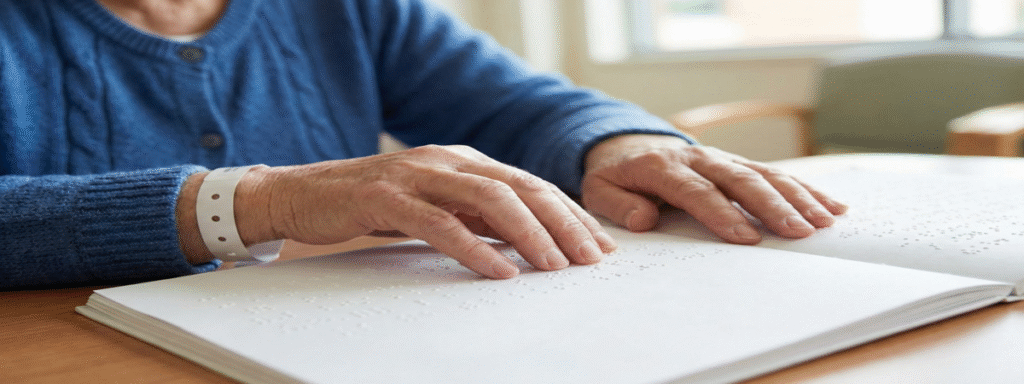
World Braille Day is observed annually on January 4, the birth anniversary of Louis Braille, the inventor of the tactile reading and writing system known as “Braille”. The day celebrates the importance of Braille as a vital means of communication and literacy for blind and visually impaired individuals worldwide. It highlights efforts toward accessibility, inclusion, and equal rights.
II. Significance of the Theme
III. What is Braille?
Braille is a tactile system of raised dots that represent alphabetic and numerical characters — and can encode musical, mathematical, and scientific symbols too. This system allows blind and partially sighted individuals to read and write through touch, enabling literacy, access to education, literature, public information, and independent living.
IV. Quick Facts about Braille & World Braille Day
- Braille was developed in the 19th century by Louis Braille to enable independent literacy for blind people
- January 4 was chosen because it is the birthdate of Louis Braille (born in 1809), honoring his global legacy.
- Braille uses a six‑dot cell to represent letters, numbers, punctuation, and more enabling blind and low‑vision persons to read and write in many languages and even represent music or mathematics.
- Braille remains essential even with modern assistive technologies (screen‑readers, audio) because tactile literacy supports privacy, independent reading/writing, navigation (labels, signs), and full participation in education and employment.
- Braille literacy is strongly linked to higher employment and independence among blind adults.
- Public Braille signage improves navigation and safety in public spaces
V. A Brief History of World Braille Day
1809: Louis Braille is born in France who later invents the Braille system at just the age of 15.
1854: Braille is officially adopted in France, two years after Louis Braille’s death.
1932: Braille code was adopted as the standard English code.
1976: The World Blind Union formally promotes braille as a global literacy standard.
2007: Introduction of the blue circle symbol to unify global diabetes awareness efforts.
2018: The United Nations proclaims 4 January as World Braille Day.
2019: World Braille Day is observed globally for the first time.
2020: The first official observance of World Braille Day took place globally.
2020s: Braille evolves alongside screen readers, mobile devices, and digital publishing, reinforcing independence and inclusion.
VI. How to Observe World Braille Day?
- Promote Braille literacy: Encourage schools, libraries, and workplaces to offer materials in Braille or accessible formats.
- Raise awareness: Share stories, facts, and challenges faced by visually impaired persons.
- Learn the basics: Try reading or writing simple Braille letters to experience tactile reading.
- Support organizations: Donate, volunteer, or advocate for policy change for blind and visually impaired communities.
- Advocate for equal access: Ensure education, public services, health, and workplaces provide Braille, audio, and other accessible formats.
References