





I. Overview
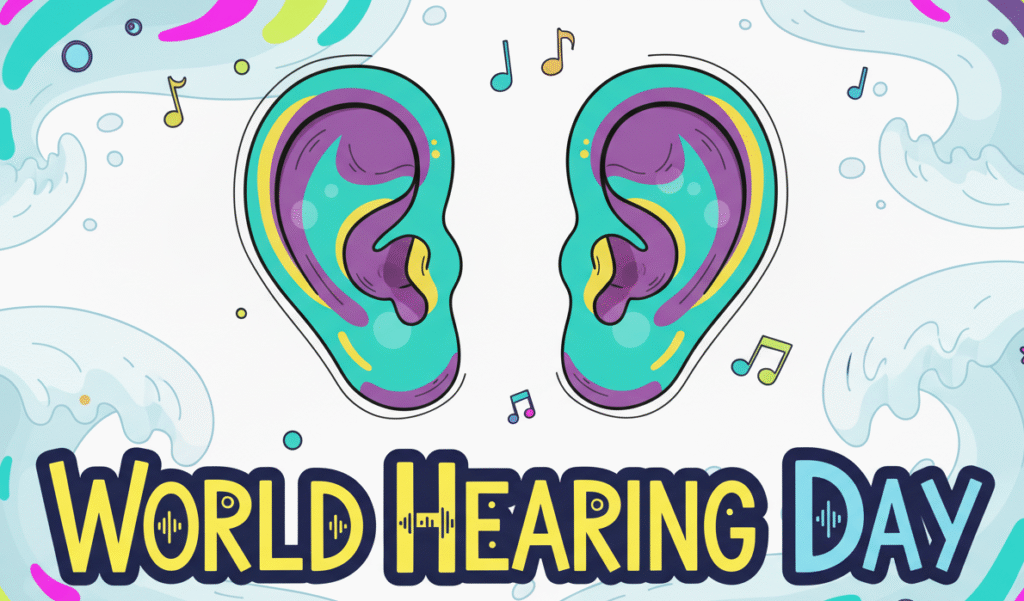
World Hearing Day (WHD) is a global event held each year to spread awareness about hearing loss, promote ear and hearing care, and encourage action to tackle related challenges. It takes place on 3 March, and every year focuses on a specific theme that guides activities organized by the WHO and its partners.
II. Significance of the Theme
This year theme, “From communities to classrooms: hearing care for all children.” stresses that every child deserves healthy hearing so they can learn and grow without barriers. By focusing on communities and schools, it pushes for preventing hearing loss early, spotting problems sooner, and making sure children get timely care so their education and development aren’t held back.
III. What is Hearing Loss and Deafness?
A person is considered to have hearing loss when their hearing ability is poorer than that of someone with normal hearing, defined as hearing thresholds of 20 dB or better in both ears. Deaf individuals usually have profound hearing loss, meaning they have little to no functional hearing. Many can benefit from cochlear implants, and some use sign language as their primary mode of communication.
IV. Quick Facts about Hearing Loss
- 1 in 4 people projected to have hearing problems by 2050 as per WHO
- Untreated hearing loss costs the world almost US$ 1 trillion every year.
- Hearing loss rises with age – 3% in people aged 20-35, 11% in those 44-55, and 43% in those 65-85.
- Over 1 billion young adults risk permanent hearing loss from unsafe listening.
- Hearing loss risk is higher among older adults, newborns with birth complications, and people exposed to loud noise at work or through personal audio devices.
- Scaling up global hearing care would cost less than US$ 1.40 per person per year.
- Every US$ 1 invested in hearing care could return nearly US$ 16 over ten years.
- About 90 million children and teens aged 5-19 worldwide have hearing loss.
V. A Brief History of World Hearing Day
2007: Started as International Ear Care Day in Beijing. The date 3/3 was picked to symbolize two ears.
2012: March 3 was declared the International Day for Ear and Hearing Care, with WHO issuing the first official notice.
2016: First year officially called World Hearing Day; focus on childhood hearing loss.
2021: WHO released the World Report on Hearing (WRH), a landmark roadmap for action.
2026: The theme highlights preventing childhood hearing loss and ensuring early care through school and community health so every child can learn and thrive.
VI. How to Observe World Hearing Day?
- Organise hearing-screening camps in schools, workplaces and community centres.
- Promote safe-listening practices: lower volume, use noise-limiting devices, take listening breaks.
- Educate families on childhood ear infections and early warning signs.
- Advocate for hearing tests to be part of routine primary healthcare.
- Share stories, infographics and campaign materials to reduce stigma around hearing aids and assistive devices.
- Train community health workers to recognise early symptoms of hearing impairment.
References
WHO – World Hearing Day
Fact Sheet – Deafness and hearing loss | WHO
WHO – Deafness and Hearing Loss Fact Sheet
World Report on Hearing (WHO)