





I. Overview
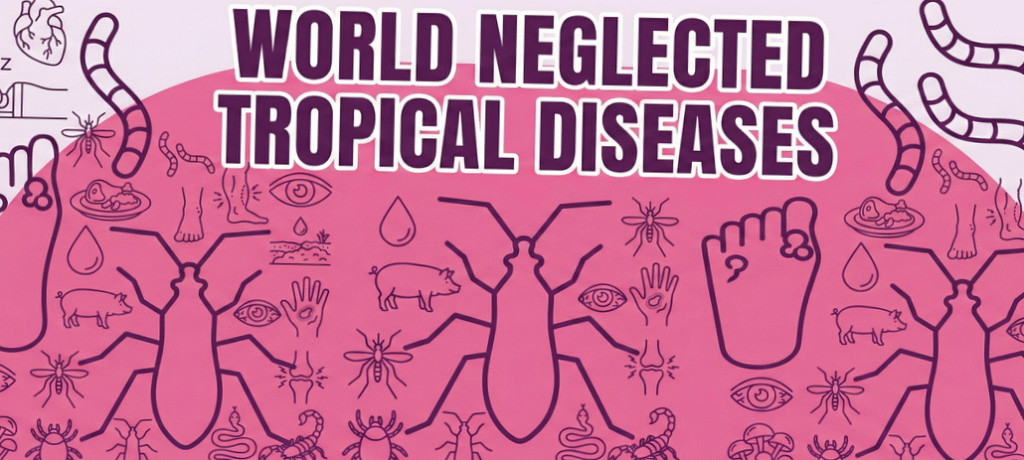
World Neglected Tropical Diseases (NTD) Day is observed annually on January 30 to raise awareness and rally global action against NTDs. Officially recognized by the WHO and endorsed by the UNs, the day highlights the burden of NTDs on over 1 billion people worldwide, primarily in low-income, tropical, and sub-tropical regions. The day began in 2020, aligning with the launch of the WHO roadmap to end NTDs by 2030. It serves as a platform for governments, researchers, health workers, and communities to work together toward eliminating preventable suffering caused by these diseases.
II. Significance of the Theme
The theme is a DIRECT ALL to collective responsibility and measurable progress. Each word in the slogan reflects a critical dimension of the global fight against NTDs:
UNITE brings together governments, NGOs, researchers, funders, communities, and affected individuals. NTDs thrive where poverty, inequality, and neglect intersect. Unity is essential to pool resources, align strategies, and ensure no population is left behind.
ACT goes beyond awareness. It focuses on scaling up drug distribution, strengthening surveillance, improving sanitation and vector control, expanding disability care, and integrating NTD programs into primary health systems. Action transforms commitments into real outcomes.
ELIMINATE sets the ultimate ambition. The goal is not just control, but to eliminate transmission, reduce stigma, and prevent lifelong disability. WHO’s 2021-30 Roadmap identifies elimination targets for multiple NTDs, and 2025 marks a critical midpoint to accelerate progress.
This theme is timely, it focuses on accountability, reinvigorates momentum at the halfway point of the global roadmap, and ties the NTD movement to the broader vision of Universal Health Coverage (UHC) and the Sustainable Development Goals (SDGs).
II. What are Neglected Tropical Diseases?
NTDs are a group of diseases that mainly affect people living in poverty, especially in tropical and subtropical regions. They’re called NEGLECTED because, for a long time, they received less attention, funding, and research compared with diseases like HIV, TB, or malaria, even though they cause a lot of illness and disability. More than 21 diseases belongs to the NTDs.
IV. Quick Facts about NTDs
- NTDs affect over 1 billion people worldwide.
- WHO’s roadmap includes a major target of 100 countries eliminating at least one NTD by 2030.
- By the end of 2024, 54 countries had eliminated at least one NTD, and WHO had acknowledged 75 elimination processes globally.
- Many NTDs are hard to control because they can be vector borne, have animal reservoirs, and involve complex life cycles.
- The number of people affected by NTDs fell from about 1.9 billion in 1990 to just over 1 billion in 2021.
- Guinea worm disease is one of the closest infections to eradication without any vaccine or curative medicine, control relies on safe water and surveillance.
- Snakebite envenoming is in the NTD family, and it is a major killer, WHO estimates 5.4 million bites per year.
- NTD progress is real but fragile, WHO’s 2025 report notes a long term decline in people needing interventions, but also flags ongoing challenges that can slow programmes.
V. A Brief History of the NTDs
2010: WHO published its first report on NTDs, framing the global burden and calling for scaled, integrated control.
2012: The first WHO NTD road map (2012-20) set targets for control, elimination, and eradication across multiple diseases.
2015: SDG target 3.3 explicitly includes ending the epidemics of NTDs by 2030.
2020: WHA endorses the NTD road map 2021-2030
2021: WHO formally launched the NTD road map 2021-30, updating targets. WHA recognized 30 January as World NTD Day.
2022: The Kigali Declaration was launched as a renewed political commitment to deliver the 2030 goals.
2023: Noma, being the latest disease, and is officially added to the NTD list.
2025: “Unite. Act. Eliminate.” was the theme for the year.
VI. How to observe World NTD Day?
- Run a local awareness push using simple messages on what NTDs are, who is at risk, and where to seek care, aligned with goals to raise profile and support action.
- Coordinate with vector control teams for actions like targeted spraying, larval source reduction, and community protection measures where vector borne NTDs are relevant.
- Strengthen case detection and referral by training frontline staff to recognize key symptoms, use standard case definitions, and link patients to diagnosis and treatment.
- Bring animal health into the plan when zoonoses matter locally, by coordinating with veterinary and wildlife counterparts and promoting One Health style surveillance
References
https://www.who.int/health-topics/neglected-tropical-diseases#tab=tab_1
https://www.sightsavers.org/diseases/